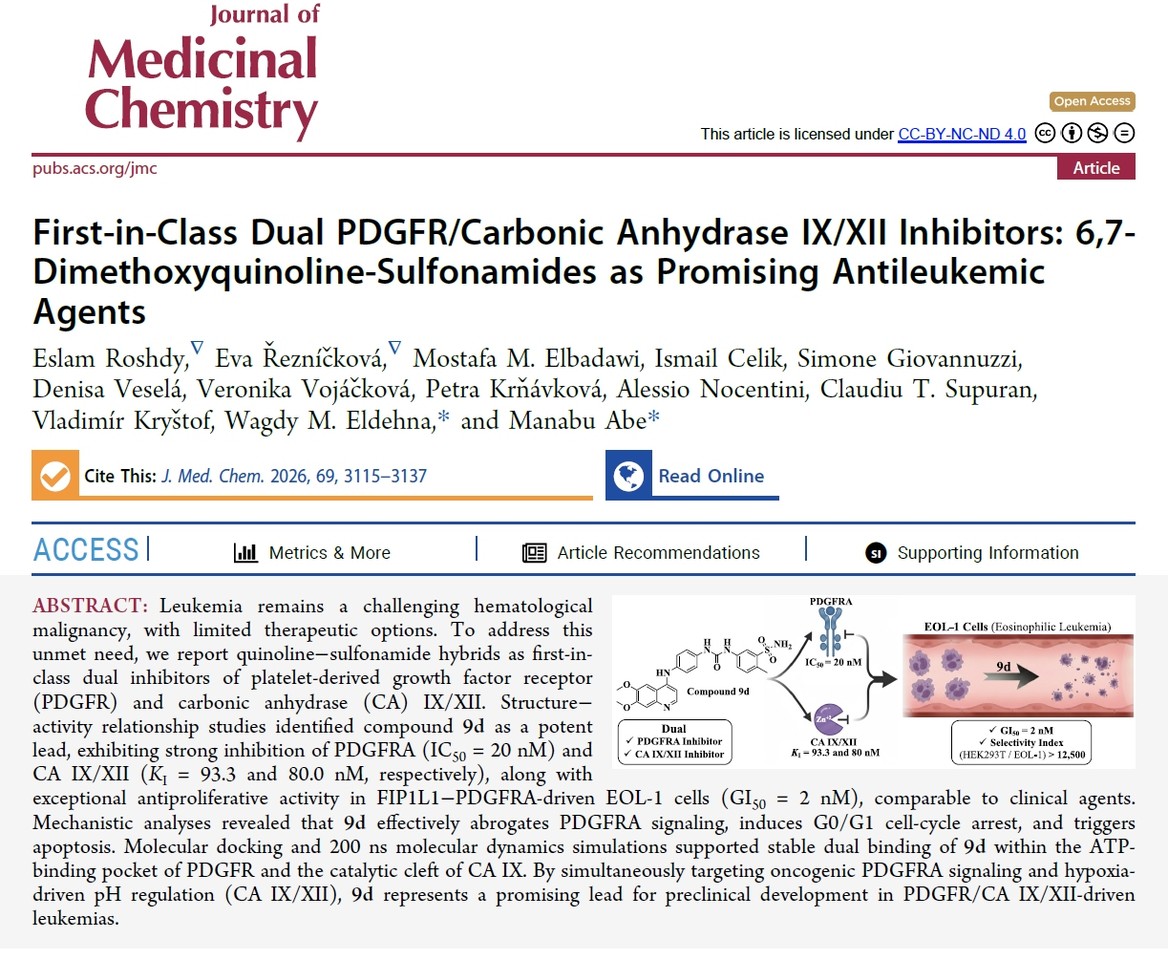
The published study reports the results of research focused on polypharmacological inhibitors that combine blockade of PDGFR signaling with inhibition of carbonic anhydrases IX and XII. The work was carried out by an international team of researchers with expertise in medicinal chemistry, structural biology, and molecular oncology. The involvement of our laboratory contributed substantially to the biological evaluation of the compounds and to the interpretation of their mechanism of action.
The authors designed and synthesized a series of quinoline–sulfonamide hybrids capable of simultaneously targeting oncogenic PDGFR signaling and the hypoxia-associated enzymes CA IX/XII, which are known to support tumor cell survival and therapy resistance. This polypharmacological strategy addresses the need for more effective therapeutic approaches to leukemias characterized by high relapse rates and limited treatment options. The lead compound, 9d, exhibited very potent inhibition of PDGFRA (IC₅₀ = 20 nM) together with pronounced antiproliferative activity in PDGFR-dependent leukemia cells (GI₅₀ = 2 nM), while maintaining selectivity toward malignant cells. Mechanistic studies demonstrated effective suppression of PDGFRA signaling, induction of G0/G1 cell-cycle arrest, and activation of apoptosis.
Overall, the results indicate that dual targeting of PDGFR and CA IX/XII represents a promising therapeutic concept for PDGFR-driven leukemias, particularly within the hypoxic microenvironment of the bone marrow, and identify compound 9d as a promising lead candidate for further preclinical development.
J. Med. Chem. 2026, 69, 3, 3115–3137.
https://doi.org/10.1021/acs.jmedchem.5c03037