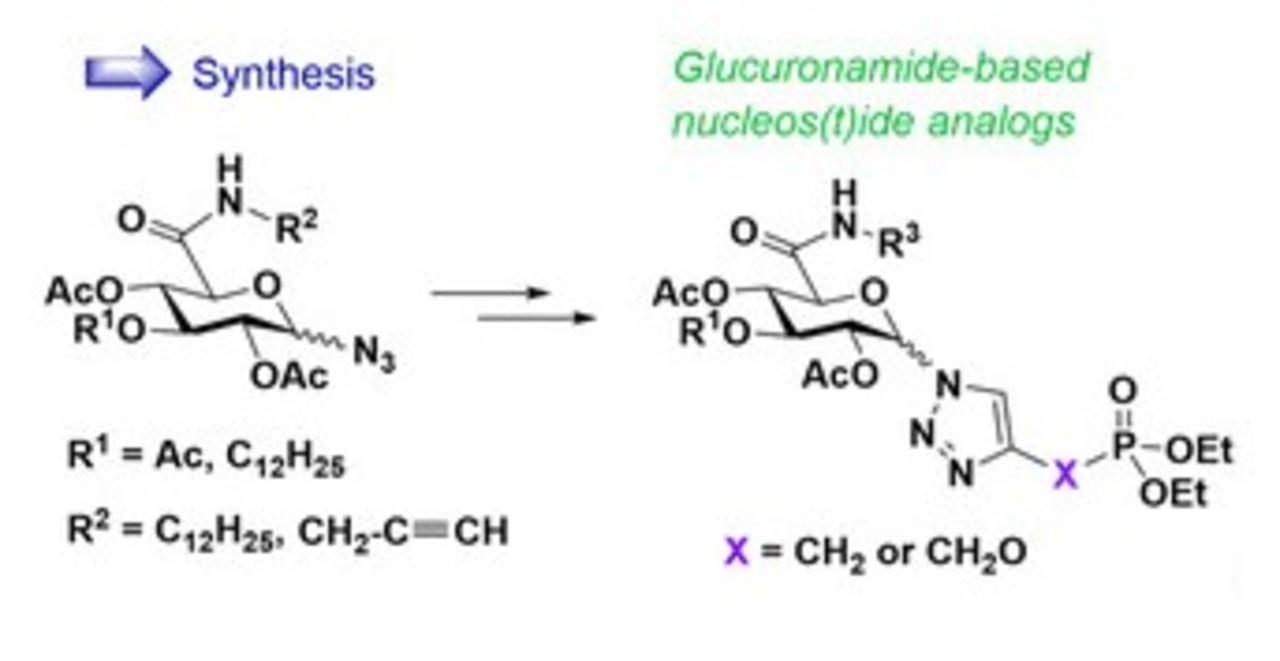
Researchers from the Department of Experimental Biology, Faculty of Science, Palacký University Olomouc, contributed to the development of a new class of synthetic nucleoside analogues based on glucuronic acid derivatives. These molecules were designed to combine enhanced chemical stability with novel mechanisms of biological action. Using modern synthetic approaches, the team prepared previously unreported compounds containing triazole and phosphonate or phosphate motifs. Although these structures resemble natural nucleotides, they exhibit distinct biological properties.
Biological evaluation revealed that some of the newly synthesized compounds effectively inhibited the growth of chronic myeloid leukemia and breast cancer cells by inducing apoptosis, a form of programmed cell death. At the same time, they displayed selective antibacterial activity against Streptococcus pneumoniae, a major causative agent of pneumonia, meningitis, and other serious infections. The study therefore highlights a promising class of molecules with both anticancer and antibacterial potential that may serve as valuable starting points for the development of future therapeutic agents.
ChemMedChem2026, 21, e70328.